
About.
Most Organizations Do Not Have a Technology Problem.
They Have an Operational Complexity Problem.
Enterprise platforms have become mission-critical - but they are rarely managed as financial assets. This leads to underutilization, increasing complexity, and rising total cost of ownership.
Lean Integrated Management Systems (LIMS)
Organizations today have access to advanced SaaS ecosystems, automation capabilities, artificial intelligence, analytics, and cloud-based operating models that were unimaginable just a decade ago.
Yet many organizations continue to struggle with rising operational overhead, fragmented governance, increasing platform complexity, and difficulty realizing the full value of their technology investments.
The challenge is rarely a lack of capability.
More often, it is the accumulation of operational complexity across platforms, processes, integrations, workflows, and organizational structures.
At Lean Integrated Management Systems (LIMS), we help organizations address these challenges through enterprise architecture, governance, operational design, and platform optimization.
Our work is focused on helping organizations build scalable, sustainable operating environments that align technology investments with measurable business outcomes.
Why We Exist
LIMS was founded on a simple observation:
Organizations often invest significant resources acquiring new technology while overlooking the growing operational complexity required to sustain it.
As platforms expand, workflows multiply, integrations increase, and automation accelerates, complexity becomes one of the most significant constraints on scalability, efficiency, and organizational agility.
This reality led to the development of Platform Economics Architecture (PEA), a framework designed to help organizations evaluate enterprise platforms through the lens of operational sustainability, governance, and long-term economic impact.
What we Believe
We believe:
-
Complexity is becoming the defining cost of modern enterprise platforms.
-
Governance must evolve alongside automation and AI.
-
Platform value should be measured through operational outcomes, not feature accumulation.
-
Sustainable architecture requires operational discipline.
-
Technology investments should create measurable business value.
These principles guide every engagement, assessment, and advisory discussion we conduct.
Looking Forward
The next generation of enterprise value creation will not come from acquiring more technology.
It will come from optimizing how technology, people, processes, governance, and AI-enabled execution operate together as a coherent system.
That is the challenge PEA was designed to address.
And that is where we help organizations create lasting value.
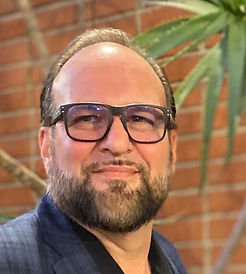
Doug McCloskey
Founder, Chief Systems & Solutions Architect
Doug is a systems and solutions architect, transformation leader, and quality and management systems expert with 30+ years of experience leading complex platform and management system transformations across highly regulated industries.
He is the creator of both the Lean Integrated Management System (LIMS) methodology and Platform Economic Architecture (PEA) - bringing together quality science, enterprise architecture, and financial discipline to help organizations optimize performance, control, and cost.
Our Approach
LIMS combines enterprise architecture, governance, operational design, and platform optimization into a unified framework focused on long-term operational sustainability.
We work with organizations to evaluate complexity, improve governance, optimize platform investments, and prepare operating environments for scalable automation and AI-enabled execution.
Our focus is not simply implementing technology.
It is ensuring technology continues to deliver measurable value as organizations grow, evolve, and adapt.